Guides / Grades and Materials
Inconel and Monel Fasteners for Heat and Seawater Service
October 23, 2026
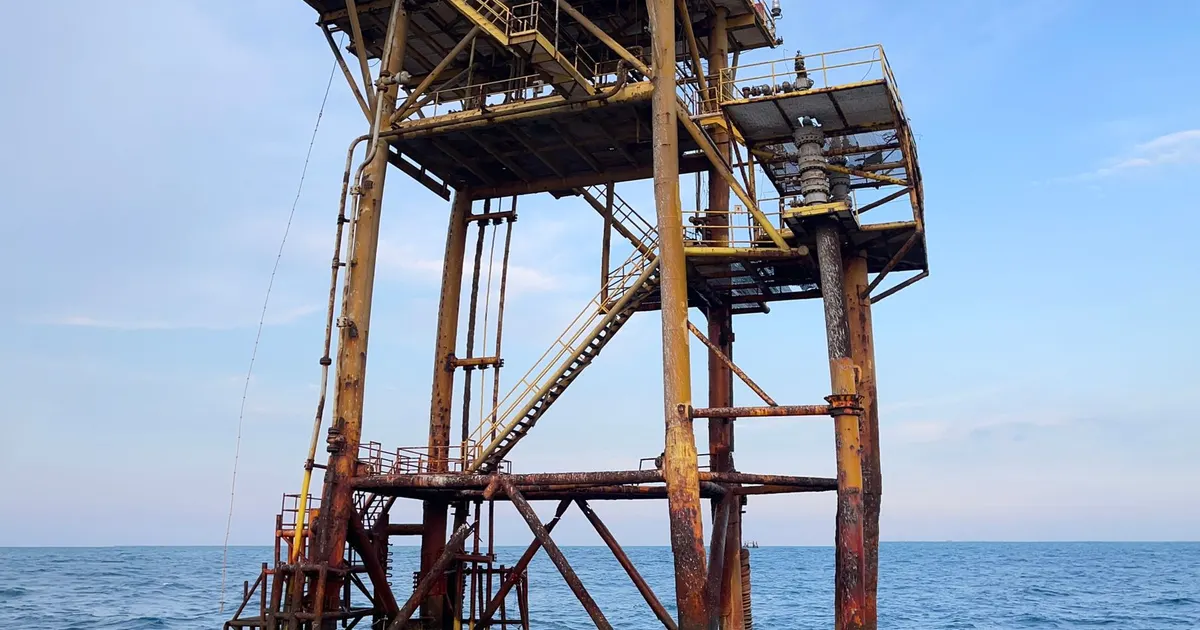
When stainless steel runs out of margin, either in heat, in seawater or in acid, the next step is a nickel alloy. Inconel and Monel are trade names for two families of these alloys, and they show up on prints as UNS numbers or as alloy numbers like 718, 625, 400 and K-500. Each has a clear sweet spot, and picking the wrong one is expensive because the parts cost many times a stainless bolt.
This guide compares the common alloys, explains how heat and seawater change the choice and lists the manufacturing issues that a buyer should expect.
The alloys in brief
Alloy 718 (UNS N07718). A nickel, chromium, iron alloy strengthened by niobium through a two step aging treatment. It keeps high strength to around 650 °C and is the standard high strength fastener alloy in gas turbines, oil and gas equipment and aerospace. Typical aged tensile strength is above 1,200 MPa. Bar standards include AMS 5662, 5663 and ASTM B637.
Alloy 625 (UNS N06625). A nickel, chromium, molybdenum, niobium alloy that is strengthened by solid solution, not by aging. It has lower strength, about 830 MPa in the annealed state, but excellent resistance to pitting, crevice corrosion and chloride attack. It is the usual answer for seawater and chemical process bolting where strength needs are moderate. ASTM B446 covers the bar.
Monel 400 (UNS N04400). A nickel copper alloy, about two thirds nickel. It resists seawater, many acids and alkalis, and it is not hardened by heat treatment, so strength comes from cold work. Tensile strength is in the range of 550 to 700 MPa depending on condition. ASTM B164 covers the bar.
Monel K-500 (UNS N05500). The aged version, with aluminum and titanium additions that precipitate when the alloy is heat treated. It reaches strength levels of about 900 to 1,000 MPa while keeping the seawater resistance of Monel 400. ASTM B865 covers bar and bolting for this alloy.
Typical figures
| Alloy | Strengthening | Typical tensile strength | Useful temperature range | Strong point |
|---|---|---|---|---|
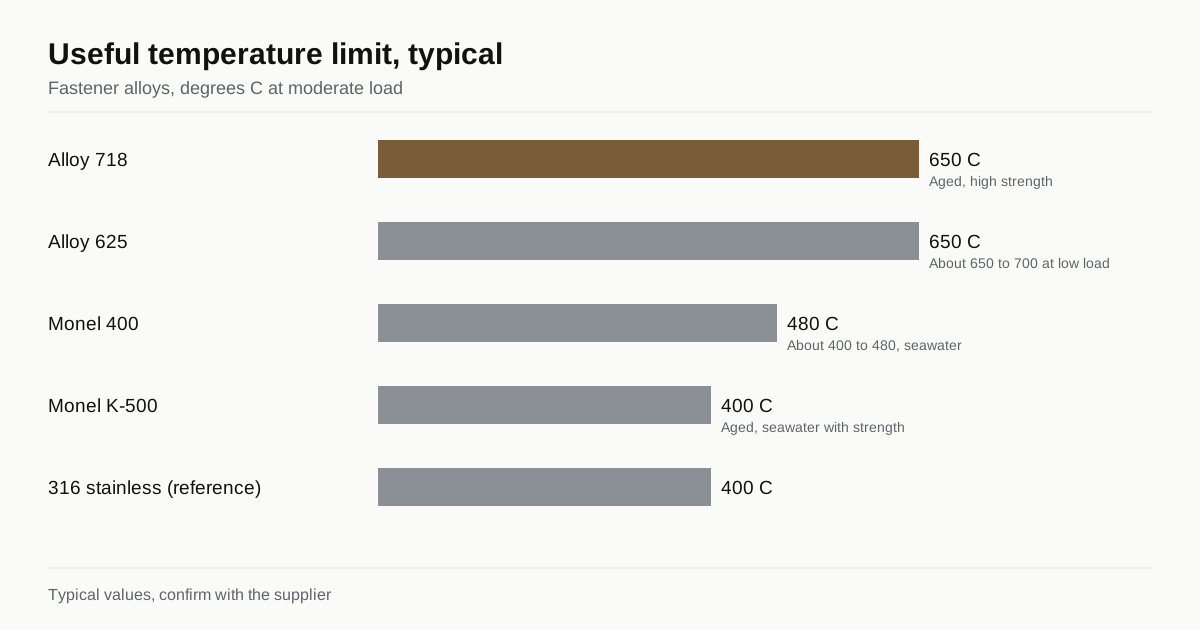
| 718 | Aging | Above 1,200 MPa | To about 650 °C | High strength at heat |
| 625 | Solid solution | About 830 MPa annealed | To about 650 to 700 °C for low loads | Chloride and crevice resistance |
| Monel 400 | Cold work | About 550 to 700 MPa | To about 400 to 480 °C | Seawater, acids, ductility |
| Monel K-500 | Aging | About 900 to 1,000 MPa | To about 400 °C or somewhat higher | Strength with seawater resistance |
| 316 stainless (reference) | Cold work | About 500 to 700 MPa | To about 400 °C | Low cost, pitting risk in seawater |
Figures are typical, and each standard sets exact minimums by condition. Temperature limits depend on the load and the time at temperature.
Heat: where each alloy fits
High temperature fasteners must keep clamp force while hot. Steel bolts begin to relax above about 400 °C and carbon steel loses strength quickly beyond that point. Nickel alloys keep their strength much longer.
- Alloy 718 suits turbine casings, exhaust systems, hot flanges and downhole tools. It has good strength and fatigue properties up to about 650 °C, though it can lose ductility after long exposure at high temperature.
- Alloy 625 suits parts where oxidation and corrosion matter more than strength, such as heat exchangers and furnace fittings.
- Monel alloys are not high temperature choices. They lose strength above a few hundred degrees.
For very high temperature, creep resistant steels and other nickel alloys apply. See ASTM A193 B7, B16 and L7 studs for the steel grades that handle moderate heat at lower cost.
Seawater: where each alloy fits
Seawater attacks stainless steel by pitting and crevice corrosion, and the damage starts under washers and in threads where the oxygen runs out. Nickel alloys with molybdenum or copper resist this.
- Alloy 625 has the best crevice resistance of the group and is common in subsea connectors and offshore piping.
- Monel 400 has a long record in marine service, such as pumps, valves and ship fittings. It resists biofouling less well than copper alloys but stays free of pitting.
- Monel K-500 gives marine strength, for example in pump shafts, bolting and fasteners for offshore equipment.
One caution applies to K-500 and to other very hard alloys. Under cathodic protection in seawater, hydrogen can enter the metal and cause cracking if the material is very hard. Users often limit hardness or choose another alloy for protected structures. The same logic appears in hydrogen embrittlement in 10.9 and 12.9 bolts. Ask the engineer of record about the protection system.
Making the parts
Nickel alloys behave differently from steel on the shop floor.
Work hardening. The metal hardens as it is cut or formed. Tools must cut under the hardened layer, so feeds are steady and tools are sharp. Cycle times are long.
Forming. Small sizes can be cold headed, especially annealed Monel 400 and Alloy 625, but dies wear fast and the parts need heavy equipment. Larger sizes are hot headed or machined from bar. Threads are generally rolled in the soft condition and aged afterwards for 718 and K-500, or rolled after aging if the specification calls for it.
Heat treatment. Alloy 718 is solution annealed and then aged in two steps, with a long total cycle. K-500 is aged at a lower temperature. Both need a controlled atmosphere and careful furnace loading.
Sulfur contamination. Nickel alloys can be attacked by sulfur at high temperature. Parts must be clean before heat treatment, with no oil, marking ink or grease containing sulfur. A good plant knows this, and you can ask how they clean the parts.
Galling. Nickel alloy threads gall, like titanium and stainless. Use a lubricant that suits the service and, for large bolts, consider different alloys for the nut and the bolt.
Cost drivers
Material is the first one. Nickel alloy bar can cost many times what 316 stainless costs per kilogram. Machining time is the second, since work hardening and low cutting speeds extend the cycle. Heat treatment and testing, including full traceability and test certificates, add more. Bolts in these alloys are often bought in small lots, so setup costs spread over few parts. See how to source custom fasteners for how setup and volume shape the price.
What to write on the print
- Alloy, UNS number and bar standard, for example Alloy 718 to AMS 5662.
- Condition: solution annealed, aged or cold worked, and the strength you need.
- Hardness limit, especially for seawater or cathodic protection.
- Thread process and class.
- Cleanliness and heat treatment controls.
- Certificates: chemistry, mechanical results and heat treatment record.
Choosing between the alloys, two cases
A flange stud for a hot exhaust line, 620 °C, steady load. Alloy 718 is the natural choice for strength at this temperature. A steel stud would relax, since steel loses strength and creeps in this range. A solid solution alloy such as 625 would hold up against oxidation but gives lower strength, so the stud would need a larger diameter. The decision turns on how much joint load the stud must carry, and the engineer should check creep and relaxation data for the alloy and the time at temperature.
A bolt for a subsea connector in cold seawater, with cathodic protection. Alloy 625 resists crevice corrosion under the bolt head and in the thread, and it is not as prone to hydrogen cracking as a very hard K-500. A K-500 bolt gives higher strength and might fit a design that needs it, with a hardness limit on the print and a check of the protection potential. The two choices differ in strength, hydrogen risk and cost, and the safe path is to ask the system engineer which risks the design accepts.
Lead time and stocking
Nickel alloy bar is made in smaller batches than steel, and a plant that does not stock the alloy may wait weeks for bar, plus time for heat treatment slots. Ask the plant if it holds the alloy in the size you need, and if it can use bar from a stocking distributor with a mill certificate. Heat treatment of 718 takes a full day or more per cycle, so batching matters, and a small order can wait for a furnace load.
If the schedule is tight, tell the plant the allowed alternatives, such as a different bar diameter that machines to the same part, or a different condition of the alloy. A buyer who accepts a standard bar size often saves weeks. Plan the first order with extra time for first article and for any hardness or strength test that the alloy needs.
Checklist for the RFQ
- Alloy and condition, or the service conditions if you want a recommendation.
- Temperature, fluid, pressure and load type.
- Drawing with head, thread, length and class.
- Certificates and traceability.
- Lead time, since bar and heat treatment can set the pace.
- Annual volume and release size.
For the step between steel studs and nickel alloys, see A286 fasteners.
For high cost alloys, a clear brief saves a round of quotes. To start, send your RFQ and we match it with up to three makers that work with nickel alloys.
Frequently asked questions
Which is better for seawater, Inconel 625 or Monel K-500?
Both resist seawater. Alloy 625 resists crevice and pitting attack better and holds strength at higher temperature. Monel K-500 has long marine use, high strength after aging and lower cost, but it can suffer hydrogen embrittlement when it is very hard and under cathodic protection. Match the choice to temperature, load and protection system.
Why do nickel alloy bolts cost so much more than stainless?
The raw material is mostly nickel plus chromium and other expensive elements. The alloys work harden, so machining is slow and tools wear fast. Heat treatment is more demanding, and many users ask for full traceability. Together these multiply the piece price compared with 316 stainless.
Can I buy these alloys from a catalog?
Common sizes of Alloy 718, 625 and Monel bolts and studs are listed by specialist suppliers. Non standard lengths, heads and threads are made to print from bar. Expect longer lead times than for steel, since the bar and the heat treatment slots are the pacing items.
Need this fastener made?
Send the print with the grade and annual volume. We match you with up to 3 makers that run the right route and reply within 24 business hours.
Send my RFQ