Guides / Grades and Materials
Bolt Head Markings: Grade Marks and Manufacturer ID on Custom Bolts
October 29, 2026
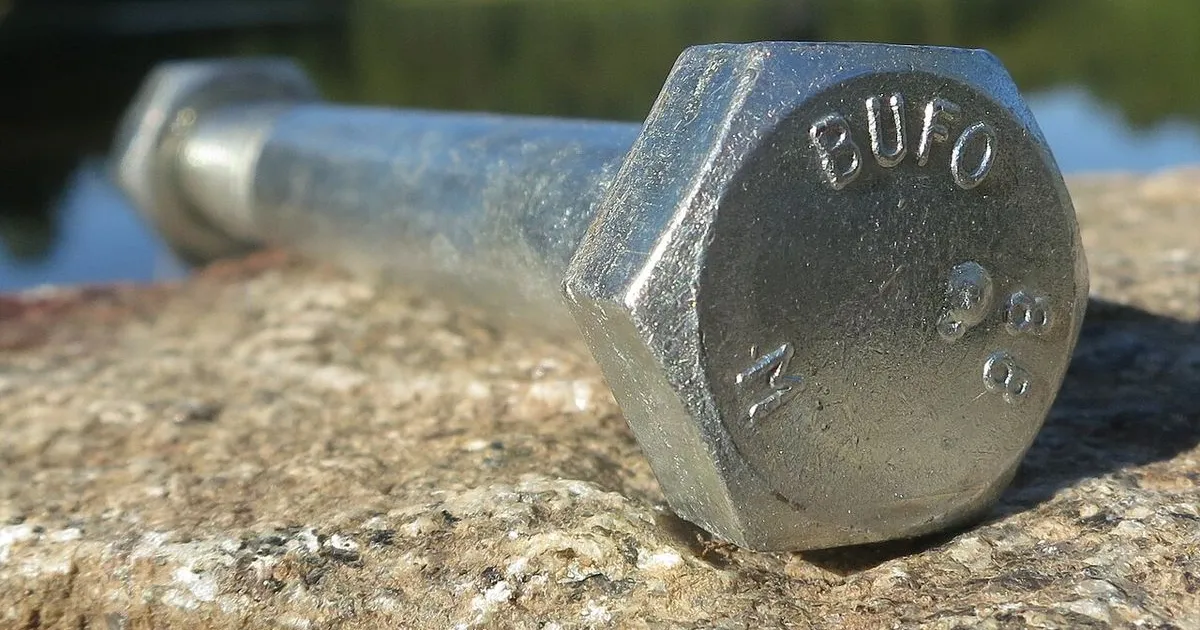
A bolt head carries two kinds of mark, and a custom order should specify both: a grade or property class symbol that states the strength level, and a manufacturer’s mark that states who made the part. The standard behind the part sets which marks are required, which is why the print must name the standard and not only the grade. This guide covers what the marks mean, how plants form them, and what to write on a made-to-print drawing.
The photo at the top of this page shows an M12 hex head bolt with the maker’s name and “8.8” raised on the head. On a cold-headed bolt both marks are formed with the head itself.
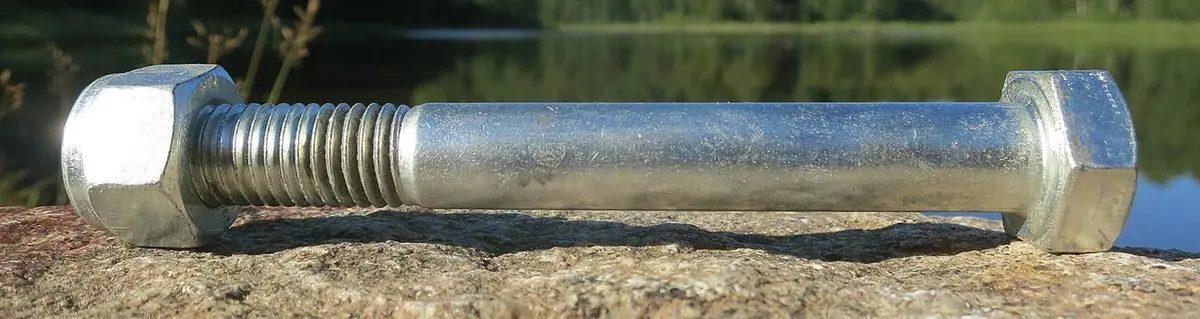
Grade mark and manufacturer mark are different things
US law draws the line clearly. In the definitions of the Fastener Quality Act, a grade identification marking is a grade mark or property class symbol, and the term does not include a manufacturer’s insignia or part number. The grade mark claims a standard. The insignia identifies the maker.
You need both to trace a bolt. A grade mark alone tells you what the part claims to be. The manufacturer’s mark tells you whom to ask when it does not meet the claim. The FQA guide for custom bolts explains how the USPTO register and the lot record fit together.
Common bolt head markings by system
| System | Grade or class mark | Manufacturer mark |
|---|---|---|
| SAE J429 inch bolts | Radial lines: three for Grade 5, six for Grade 8 | Required on marked grades, per the Industrial Fasteners Institute |
| ASTM A325 structural bolts | Symbol “A325” on the head, with optional three radial lines at 120 degrees | Required, raised or depressed at the maker’s option |
| ASTM A449 | Three radial lines at 120 degrees | Per the standard |
| ISO 898-1 metric bolts | Property class symbol such as 8.8, 10.9 or 12.9 | Trade sources say it sits beside the class mark, so confirm in your edition |
Sources for this table are the IFI bulletin on manufacturer’s identification marks (2010) and the Illinois DOT Fastener Identification Guide (November 2022). For SAE grades, the number of radial lines is the grade minus two, so Grade 5 has three and Grade 8 has six (a distributor guide from Aims Industrial states the rule, see Sources). Read the current edition of the standard before you copy any mark into a drawing.
Metric property classes follow a simple rule. The number before the point is the nominal tensile strength in MPa divided by 100, and the number after the point is the ratio of yield to tensile strength. A class 8.8 bolt has a nominal tensile strength of 800 MPa, and a yield of 0.8 times that, or 640 MPa. See fastener grades and classes for the full class table, and SAE Grade 5 vs Grade 8 for the inch side.
Where marks go and how they are formed
The mark is part of the head, so it is part of the tooling. On a cold-headed bolt the heading punch carries the engraving. The maker forms raised or depressed characters on the top of the head in the same stroke that shapes the hex, and no extra operation is needed. Raised marks stand above the top of the head. Depressed marks are sunk below it and are less exposed to handling damage. The ASTM structural standards in the Illinois guide let the maker choose raised or depressed.
For machined parts the picture is different. Heads are turned or milled and marks are stamped or engraved after machining, often on the top face or on a flat. That is another operation with its own cost, so state the position and the method on the print. The comparison in cold heading vs machining covers the route trade-offs.
The consequence for custom parts is a tooling question. A new mark means a new punch or an engraved insert. Agree the layout before the die is cut, and see cold forming tooling cost for how head details affect the die set.
Which standards do not require marks
Not every part is marked, and the print should say so when it matters. According to the IFI bulletin, socket head cap screws made to ASTM A574 are not required to carry a grade mark or a manufacturer’s mark, and so they fall outside the Fastener Quality Act, which applies only where the standard requires a grade mark. Many stainless and non-ferrous fasteners follow their own marking rules, or none. Studs, set screws and small parts often have limited space, so the standard may allow an end mark or no mark at all.
If your own process needs marked parts, whatever the standard says, put the requirement on the print. A line such as “mark per drawing, 100 percent” is a contract term that the maker can quote and the plant can inspect.
What to write on the print
Put these four items on any made-to-print bolt drawing:
- Standard and grade or class. For example “SAE J429 Grade 8” or “ISO 898-1 class 10.9”. Do not write only “grade 8”.
- Marks required. The grade symbol, the manufacturer’s mark and any customer mark, each with its position on the head.
- Form of the marks. Raised or depressed, and a note that marks must stay legible after coating. A thick coating or a blasted surface can hide a fine mark.
- Manufacturer ID. The plant’s registered or declared mark, supplied with the quote so you can compare it with the first sample.
An example callout reads: “Head marking: property class 10.9 and manufacturer’s mark, raised, on top of head. Customer logo to be agreed on sample.” For a US order covered by the Fastener Quality Act, add the standard that requires the insignia and ask the maker how its mark is recorded. A plant with a registered mark can give a USPTO number or a trademark, and a plant under a recognized quality system may not have one. Neither is a defect, but you should know which applies.
Checks on receipt
Marks are quick to check and often skipped. On the first article and on each lot:
- Look at the head. The grade mark and the maker’s mark should be present and readable, and they should match the order.
- Compare the mark with the one the maker named at quote. A different mark on the same part number is a reason to stop and ask.
- Check for mixed lots. Two marks, two sizes or two finishes in one box is a lot-control problem.
- Pair the mark with the record. Ask for the lot record with chemistry, heat treatment and test results, and do a hardness check on a few parts. See proof load, wedge tensile and hardness.
- Remember that a mark is a claim. It does not prove strength, and counterfeit or mismarked bolts exist, which is why the Fastener Quality Act bans knowingly misrepresenting marks.
Common mistakes
- Naming a grade with no standard, so the maker picks the marking system.
- Asking for a customer logo and no maker’s mark, which breaks traceability.
- Putting a mark where a wrench, a socket or a locating feature touches the head, or specifying fine depressed marks that a thick coating can fill.
- Assuming a bolt without a mark is a lower grade. It may be an unrated part, a part made to a standard with no mark requirement, or a mismarked part.
- Changing the mark between orders without telling the buyer, which leaves a mixed-origin stock.
To get quotes on the same marking scope, send your RFQ with the standard, the grade and a drawing that shows the marks. We match it with up to three makers whose process fits the part, and they reply within 24 business hours.
See also the reference page on SAE J429 grades and head marks.
For structural bolts, the grade marks A325, A490 and the twist-off marks are explained on the ASTM F3125 reference page.
Sources
- 15 U.S.C. 5402, Fastener Quality Act definitions
- 15 U.S.C. 5407, manufacturer insignia
- NIST, Compliance FAQs: Fastener Quality Act
- Illinois DOT, Fastener Identification Guide, November 2022
- Wikipedia, Screw: mechanical classifications and property class
- Industrial Fasteners Institute, Manufacturer’s Identification Mark Registration bulletin, 2010 (trade association, directional)
- Aims Industrial, how to identify high-tensile bolts (distributor guide, directional)
Frequently asked questions
What do the marks on a bolt head mean?
There are normally two. A grade or property class symbol, such as radial lines on an inch bolt or 8.8 and 10.9 on a metric bolt, says which standard strength level the maker claims. A manufacturer's mark says who made the part. Together they let you trace a bolt to a maker and a lot.
Does every bolt need a manufacturer mark?
No. The standard behind the part decides. SAE J429 requires a maker's mark on marked grade bolts, while a socket head cap screw to ASTM A574 does not need a grade mark or a maker's mark, according to the Industrial Fasteners Institute. Name the standard and the marks you want on the print.
Can I put my own logo on a custom bolt head?
Yes, if the maker can add it to the heading die, but keep the maker's mark and the grade mark. A customer logo does not replace the manufacturer's insignia, which is what lets a bolt be traced to its source. Agree the layout, the position and whether marks are raised or depressed before tooling starts.
Do head markings prove the bolt is the grade it says?
No. A mark is a claim by the maker. The proof is the lot record: chemistry, heat treatment and test results for the heat and lot. Under the US Fastener Quality Act it is illegal to knowingly misrepresent a mark or the record behind it, so ask for the record with the lot.
Need this fastener made?
Send the print with the grade and annual volume. We match you with up to 3 makers that run the right route and reply within 24 business hours.
Send my RFQ