Guides / Grades and Materials
Silicon Bronze and Brass Fasteners: Where They Still Fit
October 25, 2026
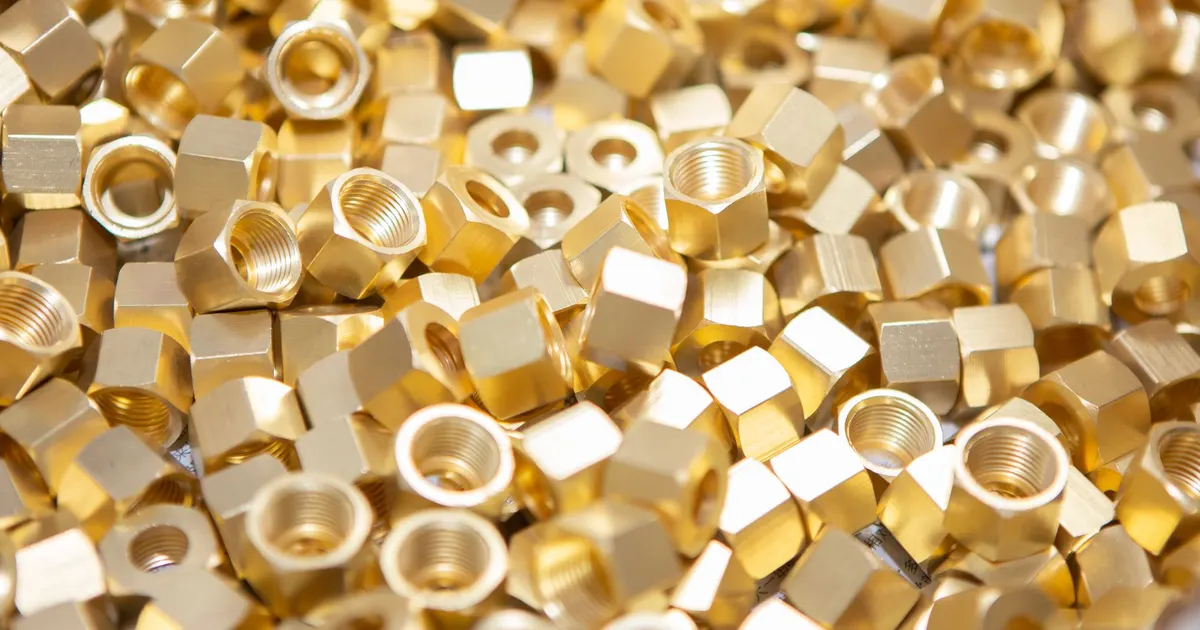
Steel and stainless fasteners cover most jobs, so copper alloy bolts are a smaller market. They still win in places where steel fails or where a second property matters. Boats, electrical gear, wood construction, plumbing and decorative hardware all keep silicon bronze and brass in use. A buyer who orders them to print needs to know which alloy fits which job and how those alloys are made.
This guide covers the common alloys, the uses where they still win, the risks and the points to set on the print.
The alloys
Silicon bronze. A copper alloy with about 1 to 3.5 percent silicon and small amounts of manganese or zinc. The two common types are low silicon bronze, UNS C65100, and high silicon bronze, UNS C65500, which is the usual choice for bolts, screws and nuts. ASTM F468 covers nonferrous bolts and screws, and ASTM B98 covers the bar.
Free cutting brass. UNS C36000, with about 61 percent copper, 35 percent zinc and about 3 percent lead. The lead breaks the chip, so it machines fast. Most small machined brass screws, nuts and pins come from it.
Cold heading brass. Alloys such as C26000 or C27000 with 65 to 70 percent copper, with no lead, form well cold. They suit headed screws and rivets made in volume.
Naval brass. UNS C46400, with about 60 percent copper, 39 percent zinc and about 1 percent tin. The tin improves resistance to seawater and dezincification. Naval brass is common in marine bolting.
Typical figures
| Alloy | Typical tensile strength | Resistance to seawater | Electrical conductivity (percent IACS) | Usual forming route |
|---|---|---|---|---|
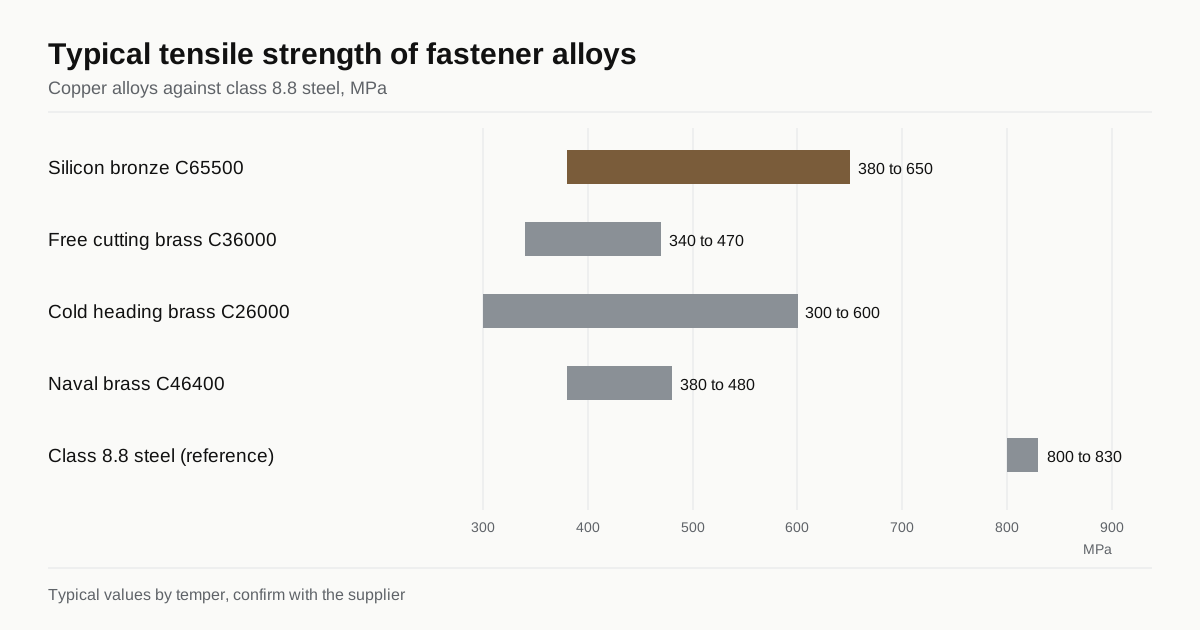
| Silicon bronze C65500 | About 380 to 650 MPa | Very good | About 7 | Cold headed or machined |
| Free cutting brass C36000 | About 340 to 470 MPa | Fair, can dezincify | About 26 | Machined |
| Cold heading brass C26000 | About 300 to 600 MPa by temper | Fair, can dezincify | About 28 | Cold headed |
| Naval brass C46400 | About 380 to 480 MPa | Good | About 26 | Machined or hot formed |
| Carbon steel class 8.8 (reference) | 800 to 830 MPa | Needs coating | About 10 | Cold headed |
Values are typical and vary with temper and diameter. Copper alloy strength is lower than steel, so a copper alloy bolt is not a drop in swap for a class 8.8 bolt.
Where these fasteners still win
Boats and marine hardware. Silicon bronze is the classic fastener in wooden boat building. It resists seawater, does not rust and does not stain the wood. It is also used in bolts, through-hulls and fittings.
Wood. The tannins in oak and cedar corrode steel, and treated lumber with copper based preservatives attacks zinc plated steel quickly. Silicon bronze and brass screws avoid both problems.
Electrical parts. Brass conducts current and resists corrosion, so it is the usual material for terminals, studs and screws on electrical connections. Silicon bronze conducts less well and is picked for strength and corrosion instead. Both are non-magnetic.
Spark resistant use. Copper alloys do not make sparks the way steel does under impact in most cases. They appear in tools and fasteners for areas with flammable vapors, with the safety rules of the site governing the choice.
Plumbing and fluid fittings. Brass is easy to machine and seals well. Lead free alloys apply to drinking water.
Decorative and architectural work. The color and the finish are part of the product. Brass takes polish and plating without trouble.
For high strength stainless options see martensitic and PH stainless fasteners, and for nickel alloys with higher temperature capability see Inconel and Monel fasteners.
Risks to plan for
Dezincification. Common brass loses zinc in warm or stagnant water, leaving a porous copper residue with little strength. A bolt can look intact and break under a light load. Choose naval brass, dezincification resistant brass or silicon bronze for water service.
Stress corrosion cracking. Brass in an ammonia bearing atmosphere cracks under residual stress. A cold headed brass screw can fail months after assembly. Stress relief annealing reduces the risk, and silicon bronze is less prone.
Galvanic corrosion. Copper alloys are noble relative to aluminum, zinc and steel. A bronze bolt in an aluminum casing in salt water accelerates the corrosion of the aluminum. Isolate or change materials.
Creep and relaxation. Copper alloys relax under load, especially when warm. A bolt that is tightened to a high preload may lose clamp force over time. For critical joints, check the design.
Lead. Free cutting brass contains lead. Rules about lead in drinking water parts and electronic products restrict its use in certain markets. State the regulation on the RFQ.
Making the parts
Copper alloys machine and form well. Silicon bronze is soft enough to cold head, but the alloy work hardens, so the former and the dies must suit it. Free cutting brass is almost always machined, on screw machines for small parts. Cold heading brass runs on formers, much like low carbon steel, and cold heading vs machining shows how volume decides the route.
Threads are rolled or cut. Rolled threads are common on headed parts and add strength by cold work. Copper alloys cannot be hardened by heat treatment in the way steel can, so strength comes from the temper of the bar or from cold working during forming.
Material costs more per kilogram than steel, and the price follows the copper market. At volume the piece price is above carbon steel and similar to or a little above stainless, depending on the alloy. Finishing options include plain, tumbled, polished and tin or nickel plated.
What to write on the print
- Alloy and standard. For example silicon bronze C65500 to ASTM F468, or naval brass C46400.
- Temper or strength. Annealed, half hard or a minimum tensile figure.
- Thread class and process.
- Lead requirement. Lead free, if the use calls for it.
- Finish. Plain, polished or plated.
- Magnetic or conductivity needs, if the part carries current.
Examples of copper alloy orders
A silicon bronze carriage bolt, 3/8 in x 4 in, for wooden boat building, 10,000 a year. The plant cold heads the part from C65500 wire, rolls the thread and leaves the finish plain. The buyer specifies UNC thread, a square neck under the head and a bolt length tolerance suited to hull work.
A brass terminal screw, M4 x 10, with a slotted cheese head, 2 million a year, for electrical switches. The route is cold heading in a cold heading brass, with a rolled thread and a nickel or tin plating for contact quality. The buyer states the plating thickness and a limit on lead content if the product ships to regulated markets.
A free cutting brass nut, M6, turned, 50,000 a year, for a plumbing fixture. Machining on a screw machine is the cheapest route at this volume. The buyer asks for a lead free alloy because the part touches drinking water, and the plant switches to an alloy suited to that rule.
Price drivers and the copper market
Copper alloy fastener prices follow the price of copper, which moves with the market. A quote is often valid for a short time, and some makers add a metal price clause that adjusts the piece price by the change in the metal price. Ask how the plant handles it, and agree on a method that gives both sides a stable outcome, such as a fixed price for a set quantity or a published index with a set formula.
Scrap matters too. Brass and bronze chips from machining are valuable and are returned to the supplier, which lowers the net cost of a machined part. Cold heading wastes less. For a large annual volume, a cold headed part in brass or bronze can cost a lot less than a turned one. The break point depends on the part, and cold heading vs machining helps estimate it. Finally, think about packaging and marking: copper alloy parts can tarnish in storage, so some buyers ask for anti-tarnish bags or a lacquer. State it on the order.
Common ordering mistakes
- Choosing common brass for a bolt that sits in warm water, where dezincification can eat it.
- Using a free cutting brass with lead in a part that touches drinking water.
- Expecting copper alloy strength to match class 8.8 steel.
- Forgetting to state the temper, so the bolt arrives soft for a part that needs more strength.
- Mixing copper alloy fasteners with aluminum parts in salt air without isolation.
A line for the alloy, the temper and the environment on the print answers each of these.
Checklist for the RFQ
- Alloy, or the environment and a request for a recommendation.
- Drawing with head, thread, length and class.
- Regulatory limits on lead or other substances.
- Finish and any plating.
- Load and temperature, to check strength and relaxation.
- Annual volume and release size.
Copper alloys sit next to steel, stainless and nickel alloys in our guide to fastener grades.
For a general guide to quote content, see how to source custom fasteners. When you are ready, send your RFQ and we match it with up to three makers that work with copper alloys.
Frequently asked questions
Is silicon bronze stronger than brass?
In fasteners the strengths are close, in the range of about 380 to 650 MPa depending on the alloy and the temper. The main difference is corrosion. Silicon bronze resists seawater and does not dezincify, while common brass can lose its zinc in warm water. Strength does not decide between them.
What is dezincification?
It is a form of corrosion where zinc leaches out of brass, leaving a weak, porous copper structure. It happens in water, especially warm, stagnant or chloride containing water. Naval brass, dezincification resistant brass and silicon bronze are the usual remedies.
Can brass fasteners be used in drinking water systems?
Free cutting brass contains lead, which regional rules for drinking water parts restrict. Lead free brass alloys exist for that use. State the regulation on the RFQ, and do not assume a catalog brass part meets it.
Need this fastener made?
Send the print with the grade and annual volume. We match you with up to 3 makers that run the right route and reply within 24 business hours.
Send my RFQ