Guides / Grades and Materials
Cold Heading Wire: 10B21, SCM435 and SWCH Grades Explained
October 12, 2026
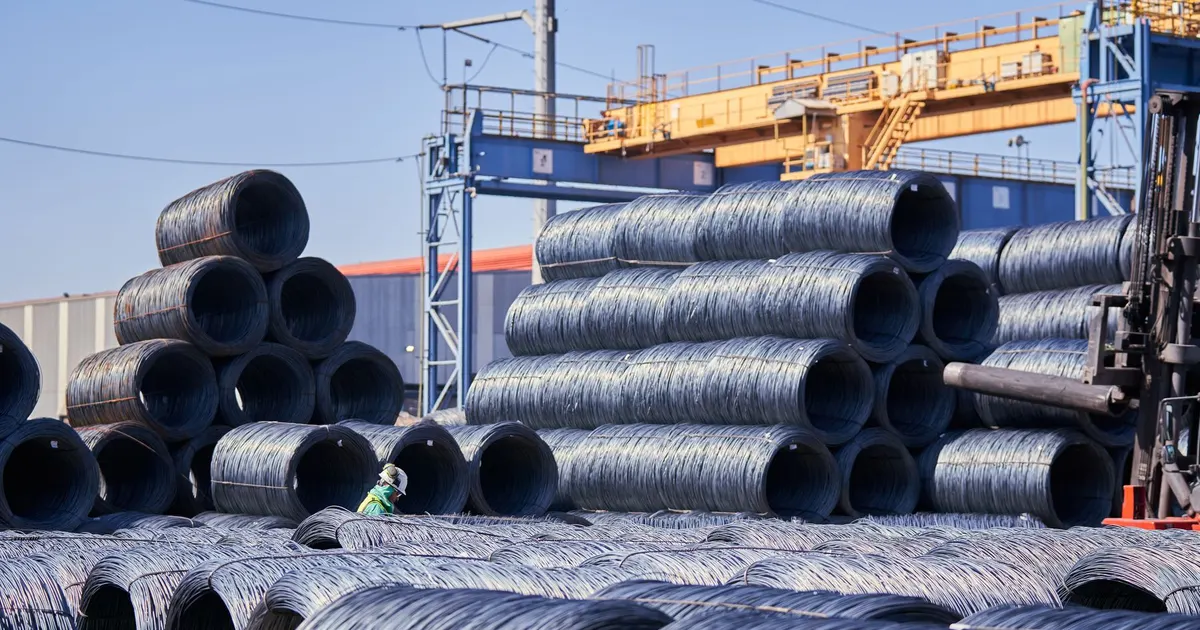
A cold formed bolt begins as a coil of wire, and the grade of that wire sets what the finished part can do. It decides which property class is reachable, how many strokes the dies survive and whether the head cracks on the first blow. The grade names on a print or a quote, such as 10B21, SCM435 or SWCH 22A, are shorthand for a chemistry and a condition, and a buyer who can read them can check that a quote makes sense.
This guide explains the naming, the grades that most custom fasteners use, the wire preparation steps and the points to put on the RFQ.
How the names work
Several standard systems share the same bolt market.
- SAE and AISI numbers, such as 10B21 and 4135. The first digits give the alloy family. The B in 10B21 shows added boron, and 21 gives the carbon content as 0.21 percent.
- JIS names, from Japan. SWCH is a carbon steel wire for cold heading, SWRCH is the wire rod form. Letters after the number give the deoxidation: A for aluminium killed, K for killed and R for rimmed. SCM435 is a chromium molybdenum alloy steel, with 435 pointing to about 0.35 percent carbon.
- EN and ISO names, such as 34CrMo4 for the alloy steel close to SCM435 and 20MnB4 for a boron grade.
Equivalents are close but not identical. A plant that wants to swap one for another should state the chemical limits and get your approval.
The grades custom fasteners use
| Grade family | Typical carbon | Hardening | Typical property classes |
|---|---|---|---|
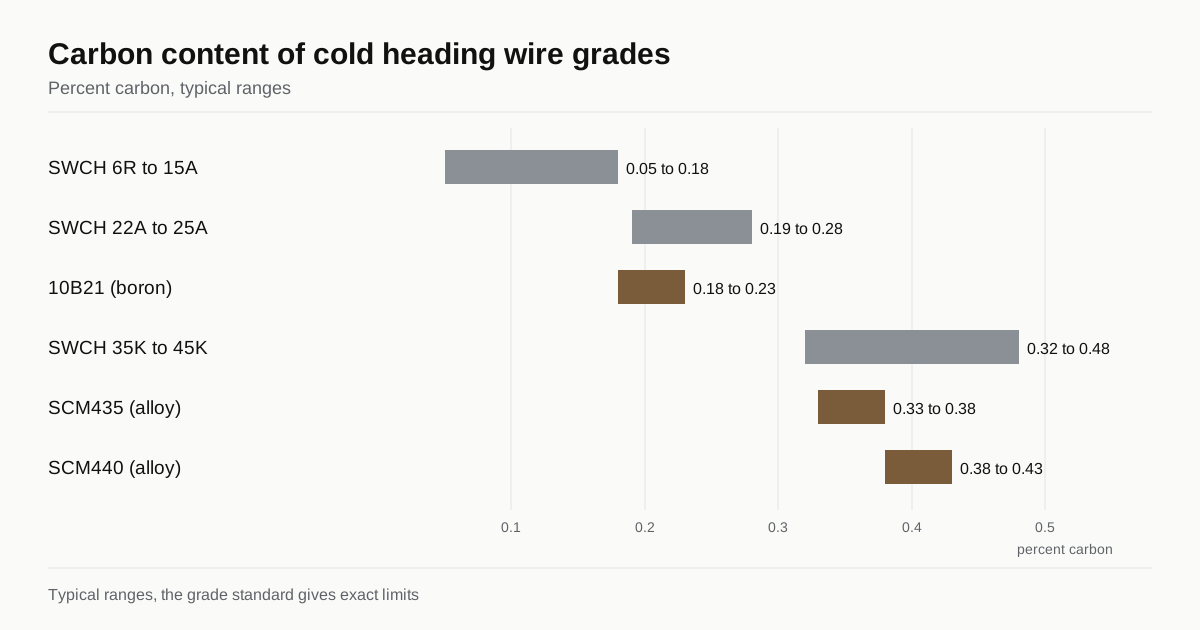
| SWCH 6R to 15A (low carbon) | 0.05 to 0.18 percent | None, or case hardening | Up to 5.8 |
| SWCH 22A to 25A | About 0.19 to 0.28 percent | Weak, partial | 5.8 to 6.8 |
| SWCH 35K to 45K (medium carbon) | 0.32 to 0.48 percent | Quench and temper | 8.8 |
| 10B21 and other low carbon boron grades | About 0.18 to 0.23 percent | Quench and temper, boron aids hardening | 8.8 and 10.9, small sizes |
| SCM435 (alloy, close to 4135) | 0.33 to 0.38 percent | Quench and temper, through hardening | 10.9 and 12.9 |
| SCM440 (close to 4140) | 0.38 to 0.43 percent | Quench and temper | 12.9 and large sections |
The carbon and alloy figures are typical ranges. The standard for each grade gives the exact limits.
The reason for boron is hardenability. A very small amount, around 0.001 percent, lets a low carbon steel harden through in the quench. Low carbon steel is soft and easy to cold head, so a boron grade combines easy forming with a reachable 10.9. ISO 898-1 lists low carbon boron steel as an allowed type for class 10.9 with a minimum tempering temperature. The trade-off is less margin in large sections, since the boron effect works in smaller diameters.
Alloy steels such as SCM435 contain chromium and molybdenum, which let the core harden in thicker sections. They suit class 12.9 and larger bolts and cost more, and they form less easily, so the wire is nearly always spheroidize annealed. See fastener grades and classes for how the property classes relate to the steel.
Wire condition and preparation
A wire grade means little without the wire condition. The plant buys wire in several states.
Spheroidize annealed. The wire is held below the critical temperature for hours, so the carbides turn round. The steel softens and flows easily. Medium carbon and alloy wires need it for heavy upsetting, and the hardness drops to about the low 80s HRB.
Drawn to size. Wire rod is drawn through dies to the exact diameter. Drawing hardens the wire, and it can be done before or after annealing. A tight diameter tolerance keeps the slug volume constant, which keeps head height steady.
Coated. The wire is pickled or shot blasted to remove scale, then coated with a phosphate layer and a soap or lubricant. This coating carries lubricant into the die and prevents galling. A wire without a good coating wears dies fast and tears the surface of the part.
Inspected. Surface defects like seams and laps in the wire become cracks in the head. Standards limit seam depth and decarburization depth in the wire. A plant that tests wire on arrival or buys from a certified mill reduces the risk.
How the wire affects cost and quality
| Wire factor | What it changes |
|---|---|
| Carbon and alloy content | Reachable property class and wire price |
| Spheroidize anneal | Die life and maximum head upset |
| Diameter tolerance | Head height and weight consistency |
| Surface quality | Head cracks and laps |
| Coating | Die wear and surface finish |
| Decarburization in the wire | Surface hardness after heat treatment |
A medium carbon wire that is poorly annealed may crack when the head upset is high. A good wire can cut die cost per part. Cold forming tooling cost shows how die life enters the price, and wire is one of the biggest factors in it.
Matching the wire to the class
For class 8.8, many plants use medium carbon wire or 10B21 type boron wire, depending on the diameter. For class 10.9, boron steel works at small sizes and alloy steel at larger ones. For class 12.9, SCM435 or a similar alloy steel is the rule. The wire also has to suit the furnace, because a steel that hardens in a belt furnace at small size may not do so in a large batch. Fastener heat treatment covers the furnace side of the choice.
If the print states only the class, the plant chooses the wire and the print stays open. If it states the grade, the plant has to use it. Opening the print saves money in most cases, as long as you state the performance you need and the tests that prove it. Hardness, tensile and proof results, as covered in fastener testing, are the usual proof.
Certificates
Ask for a mill certificate that shows the heat number, the chemistry and the mechanical properties of the wire or rod, and make sure the heat number is recorded in the lot file of the finished bolts. If traceability matters, state it, and expect the plant to keep lots separated by heat. A certificate type such as EN 10204 type 3.1 is a common request.
Examples of grade choices
A class 8.8 hex flange bolt, M8 x 25, 2 million a year. The plant picks a medium carbon wire or a low carbon boron wire, based on its furnace and the wire it can buy. Both reach 8.8 after quench and temper. The buyer states the class and the standard and lets the plant choose, which keeps the price low.
A class 10.9 socket head cap screw, M6 x 20, 500,000 a year. Low carbon boron steel can reach 10.9 at this size, and it forms easily. The plant may also use SCM435 for a safer margin on hardness through the section. The cost difference per piece is small at this size, so the plant decides on process capability.
A class 12.9 bolt, M16 x 70, 30,000 a year. SCM435 or SCM440 is the safe choice, since the section is large and the core must harden through. The wire is spheroidize annealed for the large upset, and the dies are carbide.
Buying wire: mills and traceability
Fastener plants buy wire rod from steel mills and either draw it in house or buy drawn wire from a wire drawer. The mill sets chemistry, cleanliness and surface quality. The drawer sets diameter, condition and coating. A plant with its own drawing line has more control over diameter and surface, and a plant that buys drawn wire relies on the supplier’s records.
Ask which mill and which drawer supply the wire, whether the supply is stable and how the plant checks incoming coils. Typical checks include diameter, surface, hardness, a chemical analysis certificate and a cold upset test, in which a sample is pressed to a set height to see whether the wire cracks. A coil that fails the upset test is returned, and the test costs a few minutes. If you need heat lot traceability on the finished bolts, say so on the RFQ, so that the plant keeps coils separate through heading and heat treatment.
Common ordering mistakes
- Naming a wire grade from one standard and expecting the plant to know the equivalent from another.
- Asking for class 12.9 in low carbon boron steel at a large diameter, where the core will not harden through.
- Leaving wire surface and decarburization limits off a fatigue critical print.
- Forgetting to ask whether the plant spheroidizes in house or buys annealed wire, which affects lead time.
- Changing wire supplier mid program without approval, which can shift die life and hardness.
A single paragraph in the purchase terms that bans silent changes of wire source protects a qualified part from an unnoticed shift in quality.
Checklist for the RFQ
- Property class and standard, with the grade left open or stated.
- Whether equivalents are acceptable, and who approves them.
- Wire certificate and lot traceability requirements.
- Surface and decarburization limits, if the part is fatigue critical.
- Head upset and shape, since they decide how soft the wire must be.
- Annual volume and release size.
When your list is ready, send your RFQ and we match it with up to three makers whose wire supply and formers fit the part.
Wire is the first step of the route: see the custom fastener manufacturing process.
Frequently asked questions
Why is cold heading wire spheroidize annealed?
Spheroidizing turns the hard flaky carbides in the steel into round particles. The wire becomes softer and flows more easily under the punch, so it can take a large upset without cracking and the dies last longer. Medium carbon and alloy grades nearly always need it, low carbon grades often do not.
Can I choose the wire grade myself?
You can, but most buyers specify the property class and let the maker choose the wire. The plant knows which grades its former, furnace and wire supplier handle well. If you name a grade, name the standard too, and ask whether an equivalent is allowed.
What is the difference between SWCH and SWRCH?
SWRCH names wire rod, the coil as it leaves the steel mill. SWCH names drawn wire, the product the cold heading plant buys or draws itself from rod. Both carry the same carbon steel grade numbers, such as 22A, with different standards for each form.
Need this fastener made?
Send the print with the grade and annual volume. We match you with up to 3 makers that run the right route and reply within 24 business hours.
Send my RFQ